Tracing Record-Breaking Payouts Through Layered Bonus Mechanics in Licensed Digital Reel Networks
Iris Powell · Jun 26, 2026

Tracing Record-Breaking Payouts Through Layered Bonus Mechanics in Licensed Digital Reel Networks
Layered bonus mechanics operate as stacked features within licensed digital reel networks where base game symbols trigger initial rewards while additional layers such as multipliers, expanding wilds, and progressive accumulators activate in sequence to amplify totals, and data from regulatory filings shows these systems have produced several record payouts since early 2025.
Core Components of Layered Systems
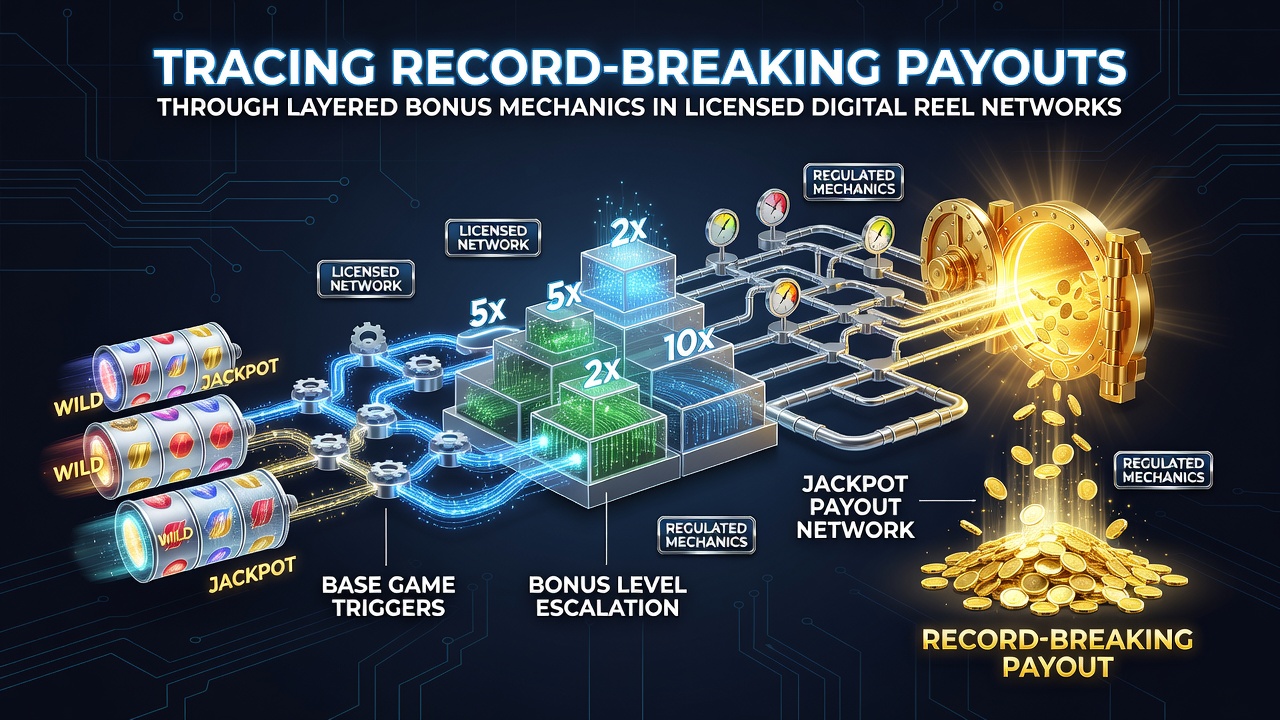
Operators configure primary layers around free spin rounds that carry forward win multipliers while secondary layers incorporate random modifiers like symbol upgrades or reel expansions that compound during the same sequence, and tertiary layers often tie into network-wide progressive pools that draw contributions from multiple jurisdictions simultaneously. Licensed platforms must log every trigger event through centralized servers so auditors can verify compliance with payout percentages that typically range between 94 and 98 percent according to reports issued by the Nevada Gaming Control Board.
Pathways to Record Payouts
Record events usually unfold when a base spin lands a rare symbol combination that unlocks the first bonus layer, after which cascading mechanics feed into a second layer that applies escalating multipliers before the final progressive trigger fires, and figures released in June 2026 indicated one such sequence produced a single-session payout exceeding 18 million dollars across interconnected European and North American servers. Observers note that the probability of full-layer activation remains low yet the mathematical scaling ensures that when alignment occurs the resulting totals surpass standalone jackpot structures by substantial margins.
Regulatory Oversight Across Regions
Agencies such as the Alcohol and Gaming Commission of Ontario require operators to submit detailed bonus-trigger logs every quarter while the Australian Communications and Media Authority mandates public disclosure of aggregate progressive contributions, and these frameworks allow independent researchers to map how layered designs distribute wins without violating local stake or return-to-player rules. In June 2026 several operators updated their reporting dashboards to include real-time layer activation counts following new transparency directives that took effect that month.
Technical Tracking Mechanisms
Digital reel networks employ cryptographic hashing on each bonus layer transition so that payout chains remain immutable once recorded, and this architecture lets compliance teams reconstruct the exact sequence that led to any record outcome within minutes of the event. Industry associations including the American Gaming Association have published technical white papers outlining standardized data schemas that facilitate cross-platform comparison of layer performance metrics while preserving player anonymity.
Geographic Variations in Implementation
European operators often embed jurisdictional caps on progressive contributions that reset after each major payout whereas North American platforms maintain continuous accumulation across state lines under multi-license agreements, and these differences influence both the frequency and magnitude of record-breaking results reported in regulatory summaries. Canadian provincial regulators have begun requiring simulation-based stress tests on layered mechanics to confirm that extreme payout scenarios remain within approved volatility parameters.
Conclusion
Layered bonus mechanics continue to drive the largest documented payouts within licensed digital reel networks because each successive layer multiplies the preceding outcome while progressive components aggregate contributions across wide player bases, and ongoing regulatory refinements ensure these systems operate transparently and within defined risk thresholds. Continued advancements in logging technology and cross-jurisdictional data sharing will further clarify how these mechanics produce verifiable records without compromising platform integrity.